Eric Harrison: The Powerful Story of Manchester United’s Legendary Class of ’92 Coach
Discover how a tough, disciplined footballer from Yorkshire became the mentor behind one of the greatest generations of young players in Manchester United history.

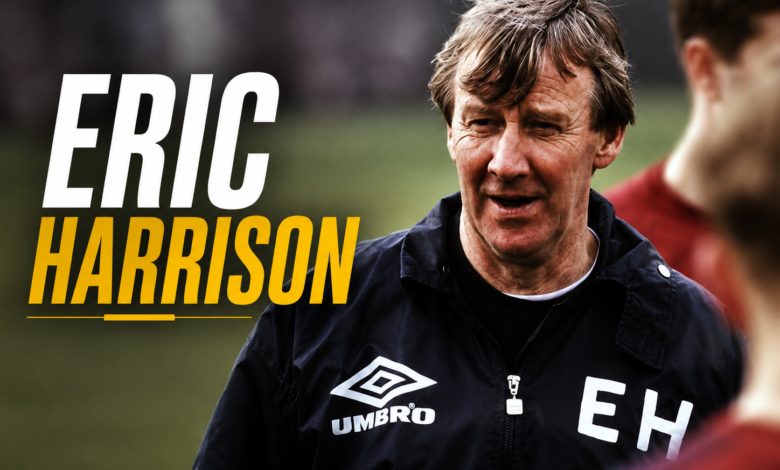
Eric Harrison was one of the most influential youth coaches in English football, even though he never achieved superstar status during his playing career. Born in Mytholmroyd, Yorkshire, he built his reputation through hard work, discipline and an uncompromising approach to football before eventually becoming a highly respected coach.
His greatest contribution came at Manchester United, where he spent 27 years and played a central role in developing a generation of outstanding footballers. His work with David Beckham, Ryan Giggs, Paul Scholes, Gary Neville, Phil Neville and Nicky Butt became closely associated with the famous Class of ’92. His influence was not limited to technical football; he also emphasized character, discipline, teamwork and responsibility.
Quick Bio
| Category | Details |
|---|---|
| Full Name | Eric George Harrison |
| Date of Birth | 5 February 1938 |
| Birthplace | Mytholmroyd, Yorkshire, England |
| Nationality | English |
| Profession | Footballer and Football Coach |
| Playing Position | Wing half / Midfielder |
| Famous For | Developing Manchester United’s Class of ’92 |
| Manchester United Role | Youth Team Manager and Coaching Coordinator |
| Manchester United Career | 1981–2008 |
| Wales Role | Assistant Manager, 2000–2004 |
| Major Achievement | FA Youth Cup victories in 1992 and 1995 |
| Honour | MBE for services to football |
| Wife | Shirley Harrison |
| Children | Two daughters |
| Date of Death | 13 February 2019 |
| Age at Death | 81 |
1. Early Life and Family Background
Childhood in Yorkshire
Eric Harrison was born on 5 February 1938 in Mytholmroyd, Yorkshire. He grew up in an area with a strong football culture and eventually began his professional playing career with his local club, Halifax Town.
Unlike many famous football coaches, Harrison did not emerge from a glamorous playing background. His early professional career was spent largely in the lower divisions of English football, where physical strength, determination and consistency were essential. These experiences later influenced the demanding standards he set for young footballers.
Family Life
Harrison kept much of his family life away from public attention. Reliable reports confirm that he was married to Shirley Harrison for 56 years and that they had two daughters.
His family remained close to him during the final period of his life. Reports following his death stated that he died peacefully surrounded by his wife and daughters.
2. Eric Harrison Playing Career
Halifax Town
Harrison began his senior football career with Halifax Town in 1957. The club was particularly significant because it was close to his birthplace.
He spent seven years with Halifax and made almost 200 league appearances, scoring 10 goals. His performances established him as a dependable midfield player and gave him valuable experience in professional football.
Hartlepools United and Barrow
After leaving Halifax, Harrison joined Hartlepools United, where he spent two seasons. He then moved to Barrow in 1966.
His first spell at Barrow lasted three seasons, during which he made 130 appearances and scored once. His physical style and reliability made him an important player in the midfield.
Southport, Barrow and Scarborough
Harrison later played for Southport before returning to Barrow. He eventually moved to Scarborough and ended his senior playing career in 1972.
His playing career was not filled with major trophies or international fame, but it gave him an important education in professional football. He experienced the pressures of competitive football at close range, something that later helped him understand the challenges faced by developing players.
3. Eric Harrison’s Transition Into Coaching
From Player to Teacher
After retiring from playing, Harrison moved into coaching. His first major coaching work came with Everton, where he spent several years developing young players.
He eventually became involved with Everton’s senior coaching structure and gained further experience in player development. His work attracted the attention of Manchester United when Ron Atkinson became the club’s manager.
Joining Manchester United in 1981
In 1981, Harrison joined Manchester United from Everton and became responsible for the club’s youth development.
This appointment became the turning point of his professional life. What initially appeared to be another coaching position eventually developed into one of the most important youth-development careers in English football history.
4. Manchester United Career
Building a Strong Youth System
Harrison’s job was not simply to teach teenagers how to play football. He was expected to prepare them for the demands of professional football.
He emphasized technical ability, work rate, discipline and the importance of competing for every ball. His approach could be demanding, but former players repeatedly remembered him as a mentor who cared deeply about their development.
Working With Sir Alex Ferguson
When Sir Alex Ferguson arrived at Manchester United in 1986, he decided to keep Harrison on the coaching staff.
Ferguson wanted Manchester United to improve its ability to produce first-team players. Harrison played a major role in that process, while the club also strengthened its scouting network. The combination of improved recruitment and Harrison’s coaching helped create a remarkable generation of young talent.
5. The Class of ’92
The Generation That Changed Manchester United
The name Eric Harrison is permanently connected with Manchester United’s Class of ’92.
The group included players such as David Beckham, Ryan Giggs, Gary Neville, Nicky Butt and, as the generation developed, Paul Scholes and Phil Neville. These players eventually became major contributors to Manchester United’s success under Ferguson.
Harrison’s contribution was particularly significant because he helped young players understand that talent alone was insufficient. They needed discipline, teamwork, concentration and the willingness to fight for their place.
FA Youth Cup Success
Harrison’s Manchester United youth side won the FA Youth Cup in 1992, providing an early demonstration of the quality of the group.
United later won the competition again in 1995, with Phil Neville serving as captain. Harrison’s teams also helped produce other players who reached the senior game, including Mark Hughes, Norman Whiteside, Clayton Blackmore, Wes Brown and Darren Fletcher.
6. Eric Harrison Coaching Philosophy
Discipline and Character
One of Harrison’s strongest qualities was his belief that football coaching should develop the person as well as the player.
Former Manchester United players frequently recalled the importance he placed on punctuality, behavior, appearance, respect and responsibility. His methods could be tough, but the positive results were visible in the careers of the players he coached.
A Positive but Tough Approach
Harrison’s philosophy combined encouragement with criticism. He understood that young players needed confidence, but he also believed they had to learn how to handle pressure and accept responsibility.
Sir Alex Ferguson later praised him for building character and determination in young players. Ferguson described Harrison as a teacher who gave young footballers a path and helped prepare them for the future.
7. Career Timeline
| Year | Career Milestone |
| 1938 | Born in Mytholmroyd, Yorkshire |
| 1957 | Began professional career with Halifax Town |
| 1964 | Joined Hartlepools United |
| 1966 | Joined Barrow |
| 1969 | Joined Southport |
| 1971 | Returned to Barrow |
| 1972 | Played for Scarborough and ended senior playing career |
| 1970s | Developed his coaching career with Everton |
| 1981 | Joined Manchester United as youth-team manager |
| 1986 | Continued under Sir Alex Ferguson |
| 1992 | Manchester United won FA Youth Cup under his guidance |
| 1995 | United won another FA Youth Cup |
| 1998 | Retired as youth-team manager and became coaching coordinator |
| 2000–2004 | Served as Wales assistant manager |
| 2008 | Ended his long Manchester United coaching association |
| 2018 | Received MBE for services to football |
| 2019 | Died aged 81 |
8. Wales National Team Career
Harrison’s coaching career was not restricted to Manchester United.
Between 2000 and 2004, he served as an assistant manager of the Wales national team under Mark Hughes. His connection with Hughes was especially meaningful because Hughes had been one of the players Harrison helped develop during his Manchester United years.
His work with Wales demonstrated that his coaching expertise extended beyond club youth football. He was able to contribute to an international coaching environment while continuing to influence players and coaches who valued his experience.
9. Later Manchester United Career
Harrison stepped down as Manchester United’s youth-team manager in 1998, but he did not immediately leave the club.
He continued as a coaching coordinator and worked with younger age groups, including players from under-nine to under-16 levels. This showed that his passion for youth development remained strong even after his most famous group had moved into senior football.
His overall Manchester United association lasted about 27 years, making him one of the longest-serving and most influential youth-development figures in the club’s modern history.
10. Eric Harrison MBE and Recognition
National Honour
Harrison received an MBE for services to football in the 2018 New Year Honours.
Because he was unable to travel to London, the honour was presented to him at Halifax’s Shay Stadium. The recognition was especially meaningful because Halifax had been his first professional club.
The award confirmed that his contribution went far beyond Manchester United. He had become recognized as an important teacher and developer of football talent.
11. Personal Life and Final Years
Harrison generally avoided the celebrity lifestyle associated with many football figures. His public identity was centered on coaching and the players he helped develop.
He was diagnosed with mixed dementia several years before his death and spent his final period in a nursing home in Halifax. Public reports focused on his condition only in connection with his final years and death.
Former players continued to visit him during his later years. His connection with the Class of ’92 remained strong even after they had become established international footballers.
12. Eric Harrison Death and Legacy
Eric Harrison died on 13 February 2019 at the age of 81. His death prompted tributes from Manchester United, the Football Association, former players and many figures across football.
His legacy is particularly powerful because his greatest achievements were created through other people. He did not become famous for scoring goals in major finals. Instead, he helped prepare the players who later scored important goals and won major trophies.
Gary Neville described him as a mentor and coach who taught the young players how to play, persevere and compete. Phil Neville regarded him almost as a second father and credited him with teaching values that remained important throughout life.
13. Positive and Challenging Aspects of His Career
Positive Impact
The strongest positive aspect of Harrison’s career was his extraordinary ability to develop young talent. His players went on to achieve success at Manchester United, in England and elsewhere.
His methods also demonstrated that youth coaching is about more than technical skills. Character, discipline and mental toughness can be equally important in building a successful professional.
Challenges
Harrison’s approach was demanding and sometimes uncompromising. Young players had to meet strict standards and accept criticism as part of their development.
However, the former players’ tributes suggest that they viewed those demanding standards positively. They understood that the difficult lessons they learned during their youth careers helped them handle the pressures of elite football.
14. Conclusion
Eric Harrison’s life in football proves that influence is not always measured by personal fame. His playing career was respectable but largely modest compared with the legendary status of the footballers he later coached.
His greatest achievement was creating an environment where talented young players could develop into professionals and, eventually, Manchester United legends. The Class of ’92 remains the clearest example of his influence, but his contribution went much further than that famous group. He helped develop numerous players and left a lasting mark on youth coaching.
His story also contains an important lesson for modern football: successful coaching is not simply about winning matches. It is about teaching young people how to work, compete, respond to setbacks and behave responsibly. That is why Eric Harrison continues to be remembered as much for the character he built as for the footballers he produced.
Frequently Asked Questions About Eric Harrison
1. Who was Eric Harrison?
He was an English professional footballer and highly respected Manchester United youth coach best known for developing the Class of ’92.
2. When was Eric Harrison born?
He was born on 5 February 1938 in Mytholmroyd, Yorkshire, England.
3. Who was Eric Harrison’s wife?
His wife was Shirley Harrison, and they were married for 56 years.
4. Did Eric Harrison have children?
He had two daughters.
5. Where did Eric Harrison begin his football career?
He began his professional playing career with Halifax Town in 1957.
6. When did Eric Harrison die?
He died on 13 February 2019 at the age of 81.
7. What was Eric Harrison famous for?
He was famous for mentoring and developing Manchester United’s celebrated Class of ’92 generation.
8. Did Eric Harrison win an honour?
He received an MBE for services to football in the 2018 New Year Honours.
9. Which players did he help develop?
He worked with players including David Beckham, Ryan Giggs, Gary Neville, Paul Scholes, Phil Neville, Nicky Butt and several other future professionals.
10. Did he coach outside Manchester United?
He served as Wales assistant manager under Mark Hughes from 2000 to 2004.